The worst message I have ever received as a seller arrived on December 26: "This was supposed to be my dad's Christmas present." The package was a vintage fishing reel, shipped December 19 with a service that normally takes three days. It arrived on the 27th. I had done nothing wrong by the rules I had set for myself, and it did not matter. The buyer was disappointed, the review was two stars, and I deserved it, because my rules were wrong for December.
Holiday shipping is not regular shipping with more volume. The carriers are slower, the buyers are less forgiving, and every promise you make, or fail to make, gets tested. This guide covers the three things that keep December sales from turning into January refunds: setting cutoffs, building a packing operation that keeps up, and communicating in a way buyers believe.
Set Your Own Cutoffs, Not the Carrier's
Every carrier publishes "ship by" dates for holiday delivery. Those dates assume the package enters their network on that day. They do not account for your handling time, your local pickup schedule, or the fact that their published dates are optimistic in a bad weather year.
Your cutoff needs to be earlier. Work backward:
- Start with the carrier's published last ship date for the service you use.
- Subtract your handling time. If you ship next business day, that is one day; if orders placed Friday evening ship Monday, that is three.
- Subtract at least two more days as a buffer for weather, volume, and the package that gets missorted.
- That is your order by date for that service. Publish it.
Then do it again for the faster service you offer as an upgrade, so that a buyer who misses the standard cutoff has a paid option for a few more days.
I do not quote specific carrier dates here because they change every year and differ by service and region. Look them up in early November, do the arithmetic above, and put your dates in writing before your first big sales weekend. The Q4 playbook puts this in the first week of November for a reason: once orders are flowing, you will not have time to think it through.
Where to publish the dates
- In every listing description, near the shipping details.
- On your storefront, in a banner or notice buyers see before checkout.
- In your order confirmation message, with the expected delivery window for that order.
- In your marketplace shipping settings, if the platform lets you set handling time and cutoffs.
Buyers will still order after the cutoff and expect delivery before the holiday. The point of publishing is not to prevent that. It is that when it happens, you can point to the stated date, offer the upgrade, and keep the review.
Build a Packing Station That Survives the Rush
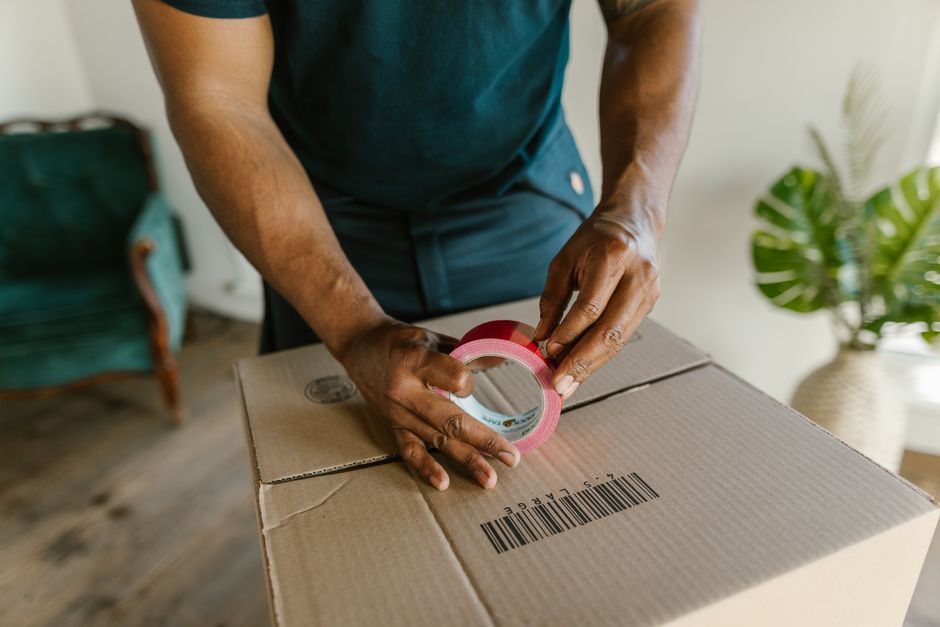
In a normal month I pack from a shelf with a roll of tape. In December that falls apart around the fourth order of the day. A packing station is just the discipline of having everything in reach and a routine that does not require decisions.
Supplies, counted in October
Boxes in the three or four sizes you use most, poly mailers, bubble wrap or paper, tape, labels, and whatever padding your fragile categories need. Count what you used last December and buy 20 percent more. Running out of medium boxes on December 15 is a problem you can only solve by paying retail at the office supply store.
A routine for every package
- Pull the item and check it against the order. Wrong-item shipments spike in December because everyone is rushing.
- Inspect it once more. If a flaw was not in the listing, message the buyer before you ship, not after.
- Pack it to survive being dropped. The fragile items guide covers the double-box method for glass and ceramics; in December, packages are handled by more people, faster, and the method matters more.
- Print the label, attach it, and mark the order shipped with the tracking number the same hour.
- Put the package in the outbound pile and move on.
Mark items sold in your inventory as you pack, not at the end of the day. If you crosslist, this is what pulls the listing from the other marketplaces before a second buyer finds it.
Ship every day
Even with two orders. A package that waits a day for "a bigger batch" in December arrives two or three days later than it should, because every day of December is slower than the one before it. If carrier pickup is available to you, schedule it daily for the season.
Choose Services and Insurance Deliberately
The cheapest service in March is not always the cheapest in December once you count late-delivery refunds.
- Tracking on everything. Non-negotiable in December. A buyer who cannot see where the gift is will open a case.
- Upgrade the close calls. If an order comes in near your cutoff, consider eating a few dollars to ship it faster. It is cheaper than a refund and a review.
- Insure what you cannot afford to replace. Carrier insurance on a $300 item costs a few dollars. Your own policy may already cover shipments; the insurance guide covers what to check.
- Signature on high-value packages. Porch theft rises in December. A signature requirement is an inconvenience for the buyer and a protection for both of you; tell them in advance.
Communicate Like You Mean It
Most December complaints are not about the package. They are about silence. A buyer who knows what is happening will wait; a buyer who hears nothing will assume the worst.
At purchase
A short message: thank you, the item ships by this date, expect delivery around that date, here is what to do if you need it sooner. Templated is fine. Sent is what matters.
At shipment
Tracking number, carrier, and the delivery estimate the carrier gave you. If you packed something as a gift (no invoice inside, a plain box), say so.
When something goes wrong
Tracking stalls, weather hits, the carrier reroutes. Message the buyer before they message you. "Your package is delayed in transit; the carrier now shows delivery on the 23rd. I am watching it and will update you." You cannot speed up the truck, but you can make sure the buyer knows you are paying attention. That alone turns most two-star outcomes into four.
After delivery
A brief follow-up a few days after delivery, asking whether everything arrived as expected. It catches problems before they become public, and the repeat buyers post covers why this small touch pays off well past the holidays.
Plan for January Now
Gifts get returned. A clear, posted returns policy, written in November, is what makes January manageable. Decide your return window (and whether it extends for holiday purchases), who pays return shipping, and what condition you require. The returns and refunds post walks through writing a policy that is fair to buyers and does not bankrupt you.
Keep your packing station set up through mid-January. Returns need inspection, relisting, and sometimes repacking, and it is easier with the supplies still in reach.
The Checklist
- Early November: look up carrier dates, compute your own cutoffs with handling time and a two-day buffer, publish them everywhere.
- Count and order supplies for the season, plus 20 percent.
- Set up a packing station and a fixed routine; mark items sold as you pack.
- Ship daily. Track everything. Upgrade the close calls. Insure the valuable ones.
- Message at purchase, at shipment, at any delay, and after delivery.
- Post a holiday returns policy and keep the station up through January.
The fishing reel buyer and I eventually sorted it out. I refunded the shipping, he updated the review to four stars, and I rewrote my December rules that week. The rules above are those rules. They are not complicated, and they would have gotten that reel there by the 22nd.