The Box of Records Nobody Wanted
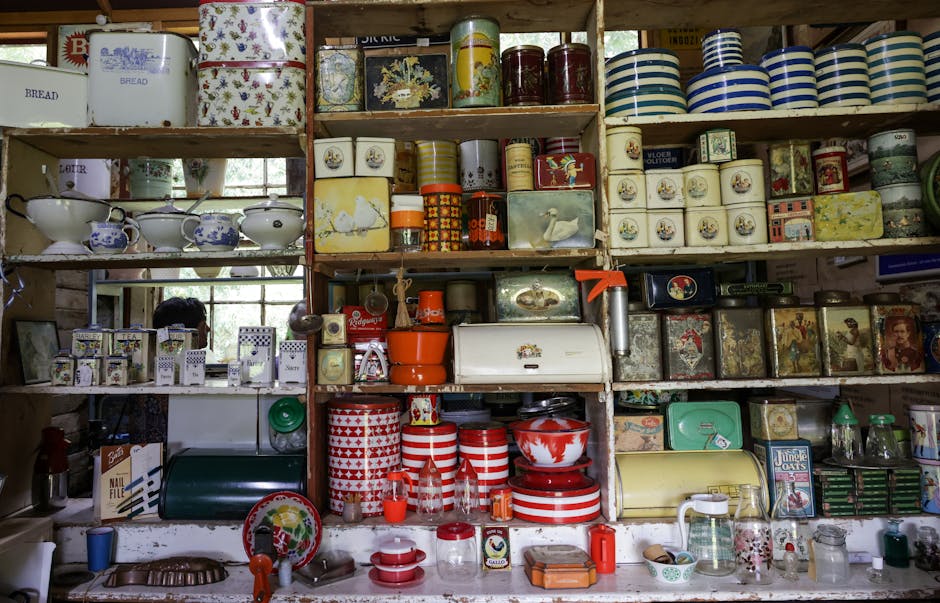
Last fall I was at an estate sale in a suburb outside Columbus. The usual crowd was there — everyone swarming the jewelry case, fighting over the mid-century furniture, picking through the kitchen for Pyrex and Fire-King. In the basement, shoved against the back wall behind a broken treadmill, sat six banana boxes full of vinyl records and about four boxes of hardcover books. Price: $2 per record, $1 per book.
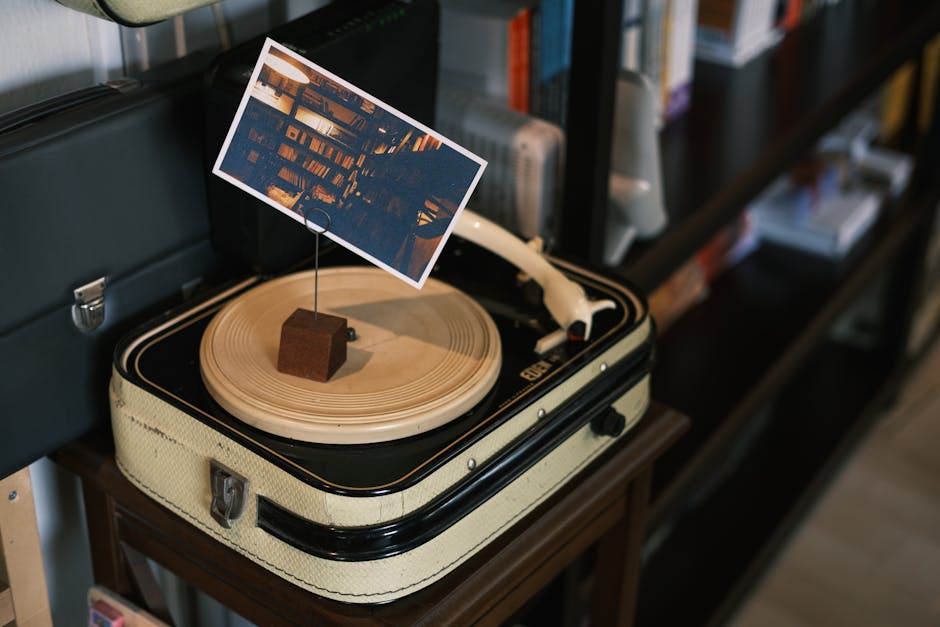
I spent 45 minutes going through those boxes while everyone else was upstairs elbowing each other over a set of Franciscan Starburst plates. I walked out with 83 records and 27 books for $193. Over the next three months, that haul brought in $2,740. My best single flip was a first pressing of Fleetwood Mac's "Tusk" in VG+ condition — paid $2, sold for $185 on Discogs.
Books and media are the category most resellers completely ignore, and that's exactly why the margins can be incredible.
Why Media Gets Overlooked
I get it. When I started reselling five years ago, I walked past books and records too. The reasons are predictable:
- They look like junk in bulk — a box of random records at a garage sale doesn't have the visual appeal of a vintage Fenton cranberry glass vase sitting on a shelf
- Most of them ARE junk — 70% of the records and books you'll encounter at estate sales are worth $1-3 at best. Herb Alpert, Reader's Digest box sets, random Danielle Steel paperbacks. This discourages people from learning the category.
- They're heavy to carry — hauling six boxes of records out of a basement is not fun, I won't pretend otherwise
- Knowledge barrier — you have to learn what to look for, and the learning curve is steeper than most categories
But here's the thing: those same barriers are what keep the margins high. In categories where everyone knows the value — Pyrex, certain toy brands, popular vintage clothing — the competition has driven margins down to 2-3x your investment if you're lucky. In media, I regularly hit 10-20x because I'm often the only person at the sale who bothers to look.
Vinyl Records: What to Look For
You don't need to be a music expert. You need to know about 30-40 things, and the rest is pattern recognition you'll develop over time.
Condition Is Everything
Records use a grading scale that every buyer knows: Mint (M), Near Mint (NM), Very Good Plus (VG+), Very Good (VG), Good (G), and Fair/Poor. The price difference between grades is enormous. A VG+ copy of a desirable album might sell for $40-80. That same album in G condition might sell for $5-8. Learn to grade accurately — buyers on Discogs will leave negative feedback fast if you call a VG record NM.
Quick grading tips I use in the field:
- Pull the record from the sleeve — always. A beautiful jacket means nothing if the vinyl is scratched to death
- Hold it under light at an angle — hairline scratches that are invisible straight-on will show up when light hits the grooves at about 30 degrees
- Check for warps — hold the record at eye level and look across the surface. Any visible warp is VG at best
- Sleeve condition matters too — a split seam, ring wear, or water damage on the jacket drops value by 20-40% even if the vinyl is clean
What Sells
The money in records isn't where most people think. Sure, an original Beatles "Butcher Cover" is worth thousands, but you'll never find one at a garage sale. Here's where the real consistent money is:
- Jazz from the 1950s-60s — Blue Note, Prestige, Impulse!, and Riverside labels. A clean original pressing of almost anything on Blue Note is worth $30-200+. I found a Hank Mobley "Soul Station" on Blue Note for $2 at a church rummage sale. Sold it for $320.
- Original pressings of classic rock — not the reissues. Look for the matrix numbers in the dead wax (the smooth area near the label). First pressings of Led Zeppelin, Pink Floyd, Black Sabbath command premiums. A first pressing of Black Sabbath's "Paranoid" with the vertigo swirl label sold for me at $145.
- Funk, soul, and rare groove — anything on smaller labels from the 70s. Obscure funk 45s can be worth $50-500 to DJ collectors. I've found $100+ funk 45s in dollar bins multiple times.
- Soundtracks and exotica — original movie soundtracks, especially horror and sci-fi from the 60s-80s. Martin Denny, Les Baxter, and Esquivel records are always in demand from the lounge/exotica crowd.
- Regional and private press — small-run albums pressed by local bands or artists. These are the hidden gold. A private press psych rock album from 1971 that nobody's heard of can be worth $200-1,000+ to the right collector.
Where to Sell Records
Discogs is king for vinyl. Period. About 80% of my record sales happen there. The marketplace is built specifically for music, buyers know the grading system, and the catalog is insanely detailed — you can list by exact pressing, label variation, and country of origin. eBay works for the bigger titles that casual buyers search for. I crosslist anything worth $40+ to both platforms.
I track all my media inventory in APMTSales just like my other categories. The nice thing about records is the data is very structured — artist, title, label, catalog number, condition grade. Having it all in one system means I can pull up my full media inventory on my phone when I'm at a sale and check if I already own a copy before buying a duplicate.
Books: The Other Hidden Gold Mine
Books are even more overlooked than records, which is saying something. Most resellers literally walk past shelves of books without a second glance. I used to be one of them until a friend showed me his eBay sales history — he was averaging $1,800/month selling almost exclusively books he sourced for $0.50-2.00 each.
First Editions
For book pricing research, AbeBooks.com is an invaluable resource for checking market values on rare and collectible books.
This is the big-money category. A first edition, first printing of a significant book can be worth anywhere from $20 to tens of thousands. You don't need to find a first edition Hemingway to make money. Here's what I look for:
- Number line on copyright page — most publishers use a number line like "10 9 8 7 6 5 4 3 2 1." If the "1" is present, it's a first printing. Different publishers have different systems (Random House says "First Edition," Scribner uses an "A" on the copyright page), so learn the top 10-15 publishers' methods.
- Book club editions are NOT first editions — book club editions are almost worthless. They're identified by a small blind stamp (indentation with no ink) on the back cover, usually in the lower right corner, and they typically lack a price on the dust jacket flap.
- Dust jacket condition — for collectible books, the jacket is often worth more than the book itself. A first edition of Cormac McCarthy's "Blood Meridian" without a dust jacket might be $200. With a clean jacket, $800-1,500.
I picked up a first edition of Michael Crichton's "Jurassic Park" at a library book sale for $0.50. Clean dust jacket, number line confirmed first printing. Sold it for $375 on eBay. That was a great day.
Vintage Cookbooks
This is a niche within books that I accidentally discovered and now actively seek out. Vintage cookbooks from the 1940s-1970s have a passionate collector base. They want specific titles:
- Community and church cookbooks — local church ladies' auxiliary cookbooks from the 50s-60s, especially from the South. These sell for $15-40 each and you find them everywhere for $1 or less.
- Brand-name promotional cookbooks — the Betty Crocker "Big Red" cookbook (1950 first edition goes for $50-80), Pillsbury Bake-Off compilations, Jell-O recipe booklets from the 40s-50s ($10-25 each)
- Junior League cookbooks — particularly from Southern cities. "River Road Recipes" from the Junior League of Baton Rouge is a classic that sells for $20-35 in good condition
I keep a running list of about 50 cookbook titles I'll buy on sight. When I'm at an estate sale, I can scan a cookbook shelf in 2-3 minutes and cherry-pick the valuable ones.
College Textbooks
This one surprises people, but college textbooks can be extremely profitable if you time it right. The key facts:
- Timing is everything — textbooks sell for top dollar in the 2-3 weeks before each semester starts (August and January). The same book that sells for $15 in June sells for $65 in August.
- STEM textbooks hold value best — organic chemistry, physics, anatomy, calculus. These are expensive new ($150-300) and students are desperate for cheaper used copies.
- Check edition currency — textbooks get "updated" editions every 2-3 years specifically to kill the used market. If the current edition is the 8th and you have the 6th, it's probably worthless. But if you have the current edition, it's gold.
- Amazon is the primary marketplace — students search Amazon for textbooks by ISBN. List there with Fulfilled by Merchant for fastest results.
I source textbooks at library sales, thrift stores, and especially at garage sales near college campuses. I bought a current-edition Campbell Biology textbook at a yard sale for $3 and sold it on Amazon for $89 two weeks before fall semester. That's a 29x return.
Box Sets and Special Editions
Box sets of records, CDs, or DVDs are another overlooked subcategory. Criterion Collection DVDs and Blu-rays hold their value remarkably well. A Criterion box set of Ingmar Bergman films that you might find at Goodwill for $5 can sell for $60-80. Complete series box sets of prestige TV shows (The Wire, The Sopranos, Breaking Bad on DVD/Blu-ray) still sell to collectors, especially in good condition with all inserts.
For music box sets, look for the big retrospective collections: the complete Stax/Volt singles box, the Mosaic jazz box sets (these can sell for $200-500), the RCA Living Stereo SACD boxes. These are heavy to ship but the margins are outstanding.
Shipping Media
One of the biggest advantages of media reselling is shipping. Books and records are dense but not fragile in the way glass or ceramics are. My shipping setup:
- Records — I use purpose-made LP mailers. You can buy them in bulk for about $1.10 each. The record goes in a poly sleeve, then into the mailer with cardboard stiffeners. Total shipping cost via USPS Media Mail: usually $3.50-5.00. Media Mail is a reseller's best friend for this category — it's dramatically cheaper than Priority Mail for heavy items.
- Books — poly mailers for paperbacks, bubble mailers or small boxes for hardcovers. Again, Media Mail keeps costs low. A 3-pound hardcover ships for about $4.00 via Media Mail versus $10+ via Priority.
- Box sets — small boxes with packing paper. Slightly more expensive to ship but still reasonable for the margins involved.
Media Mail has restrictions — it's only for books, sound recordings, and recorded media. No advertising content (so you can't technically ship a magazine with ads via Media Mail, though enforcement is inconsistent). The tradeoff is speed — Media Mail takes 5-10 business days versus 2-3 for Priority. Most media buyers understand and accept this.
Tools for Scouting
When I'm at a sale looking at books, I use a scanning app on my phone. I scan the ISBN barcode and it instantly shows me recent sold prices on Amazon and eBay. I can scan 100 books in about 15 minutes. Anything that shows a sale price above $15, I pull it and add to my buy pile. Without a scanner, you're guessing — and in books, guessing means you either buy too conservatively (missing profitable books) or too aggressively (buying books that sell for $4 and aren't worth the listing time).
For records, there's the Discogs app. You can search by catalog number (printed on the spine or label) and see exactly what that pressing has sold for recently. The catalog number is more reliable than searching by title because the same album can have dozens of pressings at wildly different values.
I log everything into APMTSales as I source it. Each record gets an entry with the artist, title, label, catalog number, and my grading notes. When it's time to list, all the research I did at the sale is already captured — I just add photos and publish. For books, I include the ISBN, edition info, and condition notes. Keeps my media inventory organized alongside everything else I sell.
Building a Niche
One thing I've learned about media reselling: specialization pays off. When I started, I'd buy anything that looked profitable. Now I've narrowed my focus to three sub-niches where I've built real expertise:
- Jazz vinyl from 1955-1970 — I know the labels, the pressing variations, the artists that command premiums. I can walk up to a box of records and spot the valuable jazz albums in seconds.
- Modern first editions (1960-2000) — I know which authors are collected, which titles are their key books, and how to spot the first printings across different publishers.
- Vintage cookbooks — I have my list of 50 titles and I know the regional publishers that produce collectible editions.
Specialization means I can source faster (I know exactly what I'm looking for), price more accurately (I've sold enough comparable items to know the market), and build a reputation with repeat buyers who know I'll have quality items in their collecting area.
The Numbers
Here's what my media reselling looks like over a typical month:
- Sourcing trips: 3-4 estate sales, 1-2 library sales, occasional thrift store runs
- Items purchased: 60-80 records, 20-30 books
- Average cost per item: $1.80
- Average sale price: $28 (records), $22 (books)
- Monthly revenue from media: $2,200-2,800
- Monthly cost of goods: $150-180
- Time spent: about 15 hours (sourcing, listing, shipping)
That's roughly $150-180/hour when you factor in the margins. Compare that to categories where everyone is competing for the same Pyrex patterns and you can see why I keep going back to those basement record boxes that everyone else ignores.
Getting Started
If you want to add media to your reselling mix, start small. Next time you're at an estate sale, spend 10 minutes with the books and records before you leave. Download the Discogs app and scan a few record labels. Flip through the hardcovers and check copyright pages for first editions. You'll probably walk away empty-handed the first few times, but you're training your eye. Within a month of intentional looking, you'll start spotting the $50 records and $100 books that everyone else walks past. That's when this category becomes addictive.